
The History of Landour: The Quiet Sentinel of the Himalayas high
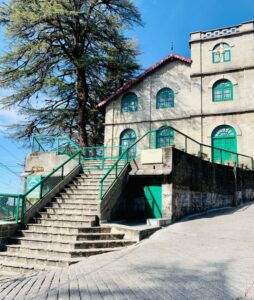
above the clamour of Mussoorie, where the air grows thinner and the scent of deodar cedar sweeter, lies Landour. It is a town that time seems to have politely stepped around—a “small, quiet cantonment” that has stubbornly refused to grow into a city. While Mussoorie became the “Queen of the Hills,” dazzling with colonial gaiety and modern commerce, Landour remained her introverted, contemplative sister, wrapped in mist and memory.1. The Irish Captain and the Gurkha Connection (1820s)The story of Landour begins not with a town, but with a hunt. In the early 19th century, following the Anglo-Nepalese War (1814–1816), the British East India Company found itself in possession of the Garhwal Himalayas. The war had been brutal, but it forged a deep mutual respect between the British and the brave Gurkha soldiers they had fought.Enter Captain Frederick Young, an Irish officer from County Donegal. Young was the founder of the prestigious Sirmoor Battalion (later the 2nd Gurkha Rifles). In 1823, while hunting for game in these hills, Young built a small hunting lodge on the Camel’s Back ridge. He named it “Mullingar” after his hometown in Ireland. This structure, the first permanent building in the area, marked the genesis of European settlement here.By 1827, the British military realized that the cool, salubrious air of these ridges was the perfect antidote to the tropical diseases ravaging their troops in the plains. A Convalescent Depot was established for British soldiers, and the area was named Landour, borrowing its name from Llanddowror, a tiny village in Carmarthenshire, Wales—a nod to the Welsh heritage of some of the early officials.2. The Cantonment Act: Freezing TimeUnlike Mussoorie, which was civil territory open to expansion, Landour was designated a Cantonment. This military classification is the single most important factor in its history. The Cantonment Act of 1924 essentially froze the town’s footprint. New construction was strictly banned, and deforestation was prohibited.While the rest of the Himalayas saw concrete hotels rise, Landour remained a sanctuary of stone cottages, tin roofs, and ancient trees. The “tiara” of the hill station, it looks down upon the Doon Valley from an altitude of 7,000 to 7,500 feet, preserving an architectural aesthetic that has barely changed in two centuries.3. Landmarks of Faith and CommunityLandour’s history is written in its buildings, most of which were constructed to serve the spiritual and physical needs of the convalescing soldiers and the missionaries who followed them.St. Paul’s Church (1840): Built for the British troops, this Anglican church was the social hub of the early Cantonment. It was here, under the stained-glass windows, that soldiers prayed for home. Interestingly, the pews have notches cut into the wood to hold the soldiers’ rifles—a stark reminder of the congregation’s profession.Char Dukan: Adjacent to St. Paul’s lies a row of four historic shops, collectively known as Char Dukan. Established in the late 1800s to serve the British soldiers with tea, snacks, and provisions, these shops have been run by the same families for generations. They remain the unofficial “town square” of Landour.Kellogg Memorial Church (1903): Named after Dr. Samuel H. Kellogg, a Presbyterian missionary and scholar of Hindi grammar, this grey stone gothic church dominates the ridge near the Library. It also houses the Landour Language School, where generations of missionaries and expatriates have come to learn Hindi, Urdu, and Punjabi.Sisters’ Bazaar: Farther along the ridge lies a small market area that once housed the nursing staff (the “Sisters”) of the military sanatorium. Today, it is famous for its bakehouse and traditional general stores, retaining the layout of the 19th century.4. The Literary HavenIf the 19th century belonged to soldiers, the 20th and 21st centuries in Landour belong to writers. The town’s quietude has acted as a magnet for creative minds.The most celebrated resident is, of course, Ruskin Bond. Since the 1960s, Bond has lived in Ivy Cottage, capturing the essence of Landour in his prose. His stories of simple hill folk, ghosts in the deodars, and the changing seasons have mythologized Landour for readers worldwide. To walk the “Upper Chukkar” road is to walk through the pages of a Ruskin Bond story.Other notables, such as actor Victor Banerjee and filmmaker Vishal Bhardwaj, also call Landour home, drawn by the privacy and the profound silence that is rare in modern India.5. The Winterline and Nature’s MagicLandour is famous for a rare atmospheric phenomenon known as the Winterline. From mid-October to January, the setting sun drops behind a false horizon of grey and mauve, creating a distinct line of vivid colors—fierce oranges, deep reds, and purples—that splits the sky. It is said that this specific optical phenomenon is visible in only two places in the world: parts of Switzerland and here in the Mussoorie range.The natural history of Landour is as rich as its human history. The northern slopes are cloaked in dark, brooding Deodars (Cedrus deodara or “Timber of the Gods”), while the southern slopes are covered in Ban Oak and Rhododendron, which burst into flaming red flowers in the spring.ConclusionToday, Landour exists as a living museum. It is not a place of “attractions” in the tourist sense, but a place of atmosphere. It is a town where the postman still walks miles to deliver letters, where leopards still tread softly on the pine needles at night, and where the ghost of the British Raj lingers—not in oppression, but in the architecture, the bakeries, and the mist that rolls in from the valley, claiming the hills for itself.